

Steam blocking is an efficient way to enhance the appearance of knit and crochet projects, just remember that not all fibers can tolerate hot steam. Acrylic, for example, can melt or lose elasticity if overheated. Always check your yarn’s care instructions and choose the correct heat setting before you begin.
I typically steam‑block projects made from 100% cotton, and I find steam very effective for 100% wool garments. However, I avoid steaming or pressing textured fabrics, as steam can flatten the texture.
TIP: Before applying steam to your project, always test it on a swatch. Measure the swatch before and after steaming to ensure it won’t melt, stretch, shrink, or lose firmness.
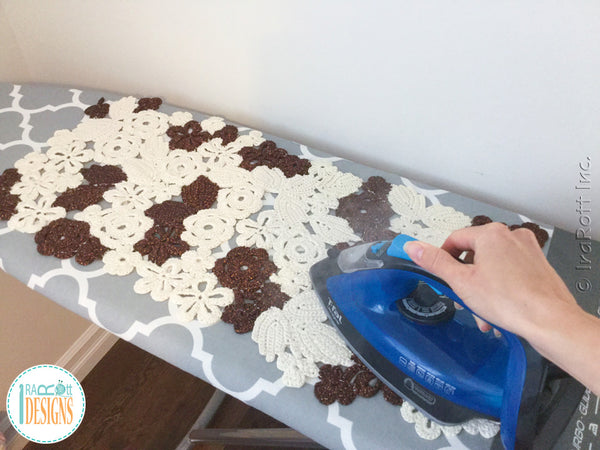
Steam Blocking With a Steam Iron
- Fill your iron’s water reservoir and heat it to the appropriate setting for your yarn.
- Lay your project on the ironing board with the wrong side facing up.
- Apply steam gently; avoid stretching or pressing too hard.
- For delicate fabrics, hover the iron above the surface without touching it.
- For cotton lace, I prefer pressing in an up‑and‑down motion, never side‑to‑side.
- Allow the fabric to cool completely before moving it to prevent distortion.
- For garments, steam‑block each piece individually, then lightly steam the seams after assembly.
Steam Blocking With a Garment Steamer
Garment steamers offer a gentle, hands‑off approach to blocking. They work well for:
- Afghans
- Knit garments
- Crochet shawls
- Any fabric that can safely tolerate steam
Hover the steamer over your project without touching it, let the steam relax the fibers, and allow the piece to cool before handling. And as always - test on a swatch first.
Steam Blocking Through a Wet Cloth
This traditional method protects your fabric from shine, distortion, and direct heat.
- Soak a pressing cloth or cheesecloth and wring out excess water.
- Lay the damp cloth over your project.
- Press lightly with a hot iron in an up‑and‑down motion, allowing steam to pass through the cloth into the fabric.
- Continue until the cloth is dry.
- Let your project cool completely before moving it.
This method is especially helpful for fibers that need extra protection.

Examples and Further Tutorials
Below are some of my crochet projects finished using steam blocking.
To explore other blocking methods, check out my tutorials on Spray Blocking and Wet Blocking.


