
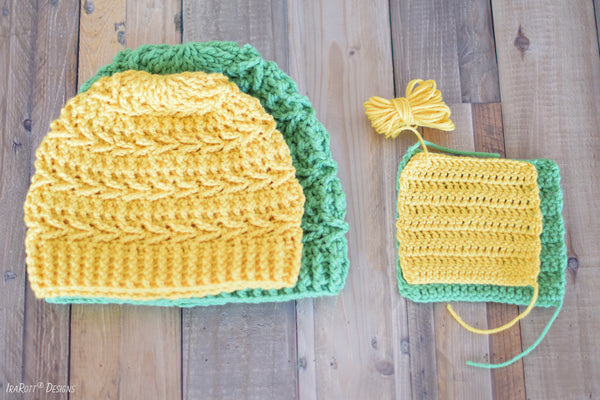
The significance of knitting and crochet gauge in achieving accurate sizing cannot be overstated. Below are two hats made with medium‑weight (4) yarn and the same hook size. Even though both yarns have nearly identical yardage per 100 g, their different fiber contents caused them to behave differently, resulting in one hat turning out noticeably larger than the other.
What Is Gauge?
Gauge refers to the number of stitches and rows per inch/cm. It’s the measurement that determines the final size of your project.
Example: 16 dc × 9 rows = 4″ × 4″ (10 × 10 cm)
Gauge is essentially the pattern’s sizing blueprint.

Why Gauge Matters
Everyone crochets with slightly different tension. That’s why checking gauge is essential when size matters.
- If you crochet too tightly, you’ll have more stitches within 4″ (10 cm), and your project will turn out smaller.
- If you crochet too loosely, you’ll have fewer stitches, and your project will turn out larger.
How to Check Your Gauge
- Make a swatch slightly larger than the gauge measurement.
- Block the swatch if the pattern lists gauge after blocking.
- Using a ruler or gauge tool, count the stitches and rows within the required measurement.
- Compare your results to the pattern’s gauge and adjust as needed.
To match the pattern’s gauge, you may need to:
- Adjust your hook or needle size
- Modify your tension
- In some cases, choose a different yarn

Maintaining Consistent Gauge
Once your gauge is set, you can begin your project with confidence. To keep your tension steady:
- Work at a comfortable pace
- Avoid speeding up or slowing down too much
- Be mindful that tension can shift with mood, time of day, or distractions
- Check your stitches occasionally as you go
Consistency is key to a beautifully finished project.
Pattern Example
My Textured Mountain Hat includes six sizes (from Baby to Large Adult) and each size uses just one hank of Berroco Vintage Yarn.


